


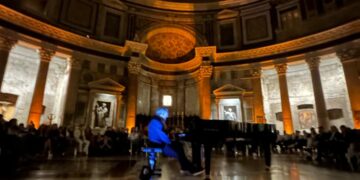








C’è una chiesa protestante a Garbenheim, un piccolo borgo dell’Assia, dove domenica dopo domenica la comunità si ritrova per la messa, il caffè e le torte fatte in casa. Tra quelle stesse navate, però, per qualche mese è successo qualcosa di decisamente insolito: una suora italiana e un prete tedesco si sono sfidati a colpi di algoritmo.
È il cuore narrativo di “Holy B3”, una serie di cortometraggi sperimentali nata dall’incontro tra due talenti originari della Puglia: Claudio D’Attis — nato in Germania ma cresciuto a Guagnano, nel leccese — e Roberto Basile, pittore e ballerino di Martina Franca.
L’Intelligenza Artificiale entra in chiesa
Ispirandosi alle riflessioni filosofiche di Luciano Floridi, la serie esplora il confine sottile e ambiguo tra fede e tecnologia. Il contrasto centrale è quasi morale:
Il sacerdote tedesco impiega l’intelligenza artificiale come strumento di giudizio e punizione.
La suora italiana ne fa un mezzo di empatia e perdono.
Attorno a loro ruota una galleria di personaggi surreali e quotidiani: un astronauta, un’infermiera, un sindaco, una gelataia e persino un robot.
Un cinema che crea comunità
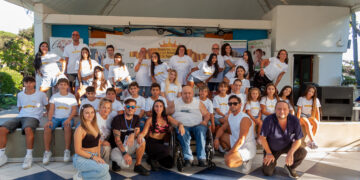
I due autori non si sono limitati a girare tra le mura della chiesa di Garbenheim tra agosto e novembre. Prima del primo ciak, hanno trasformato il progetto in un’opportunità per il territorio, aprendo il set gratuitamente a dieci residenti della zona — insegnanti, studenti, imprenditori e artisti locali — guidandoli in un vero e proprio laboratorio pratico di regia e produzione.
Quando le prime puntate sono state proiettate a gennaio proprio davanti alla comunità locale e alla pastora, la risposta è stata immediata ed entusiasta.
I riconoscimenti internazionali e i progetti futuri
Il valore di “Holy B3” ha travalicato rapidamente i confini dell’Assia:
Hollywood: D’Attis si è aggiudicato il premio come miglior regista sperimentale.
Italia: È arrivata la menzione per la miglior regia al Terra di Siena International Film Festival.
Sviluppo: La Film Commission dell’Assia ha scelto di finanziare la stesura della sceneggiatura per trasformare il corto in un lungometraggio.
Mentre il progetto cinematografico cresce, prosegue anche il percorso accademico di D’Attis, impegnato in un dottorato all’Università di Siegen focalizzato proprio sull’integrazione tra Intelligenza Artificiale e Realtà Aumentata nella formazione professionale.
Un ponte unico che unisce le radici pugliesi, la sperimentazione tedesca e i riflettori di Hollywood.
Scritto inglese
Faith, Algorithms, and Salento: How Two Artists from Apulia Won Over Germany and Hollywood
There’s a Protestant church in Garbenheim, a small village in Hesse, where week after week the community gathers for Sunday service, coffee, and homemade cakes. Yet, for a few months, something truly unusual took place within those very aisles: an Italian nun and a German priest went head-to-head using algorithms.
This is the narrative core of “Holy B3,” an experimental short film series born from the collaboration of two talents from Apulia, Italy: Claudio D’Attis—born in Germany but raised in Guagnano, near Lecce—and Roberto Basile, a painter and dancer from Martina Franca.
Artificial Intelligence Enters the Church
Inspired by the philosophical works of Luciano Floridi, the series explores the fine, blurred line between faith and technology. The central conflict is almost moral in nature:
The German priest uses artificial intelligence as a tool for judgment and punishment.
The Italian nun turns it into a vehicle for empathy and forgiveness.
Orbiting around them is a gallery of characters both surreal and everyday: an astronaut, a nurse, a mayor, an gelato maker, and even a robot.
Cinema That Builds Community
The two filmmakers didn’t stop at shooting inside the church of Garbenheim between August and November. Before rolling the cameras, they turned the project into an opportunity for the local community, opening the set free of charge to ten locals—teachers, students, entrepreneurs, and local artists—guiding them through a hands-on workshop in directing and filmmaking.
When the first episodes premiered in January right in front of the local congregation and the pastor, the response was immediate and enthusiastic.
International Acclaim and Future Plans
The value of “Holy B3” quickly transcended the borders of Hesse:
Hollywood: D’Attis won Best Experimental Director.
Italy: The film earned an honorable mention for Best Director at the Terra di Siena International Film Festival.
Development: Hessen Film & Media awarded funding to develop the screenplay into a full-length feature film.
As the film project continues to grow, D’Attis is also advancing his academic career. He is currently pursuing a PhD at the University of Siegen, focusing specifically on integrating Artificial Intelligence and Augmented Reality into vocational training.
It’s a unique bridge linking Apulian roots, German experimentation, and the Hollywood spotlight.
Anna Rita Santoro e Ubaldo Santoro


