










Caffè della VerGOGNA – edizione del 18 Novembre 2026
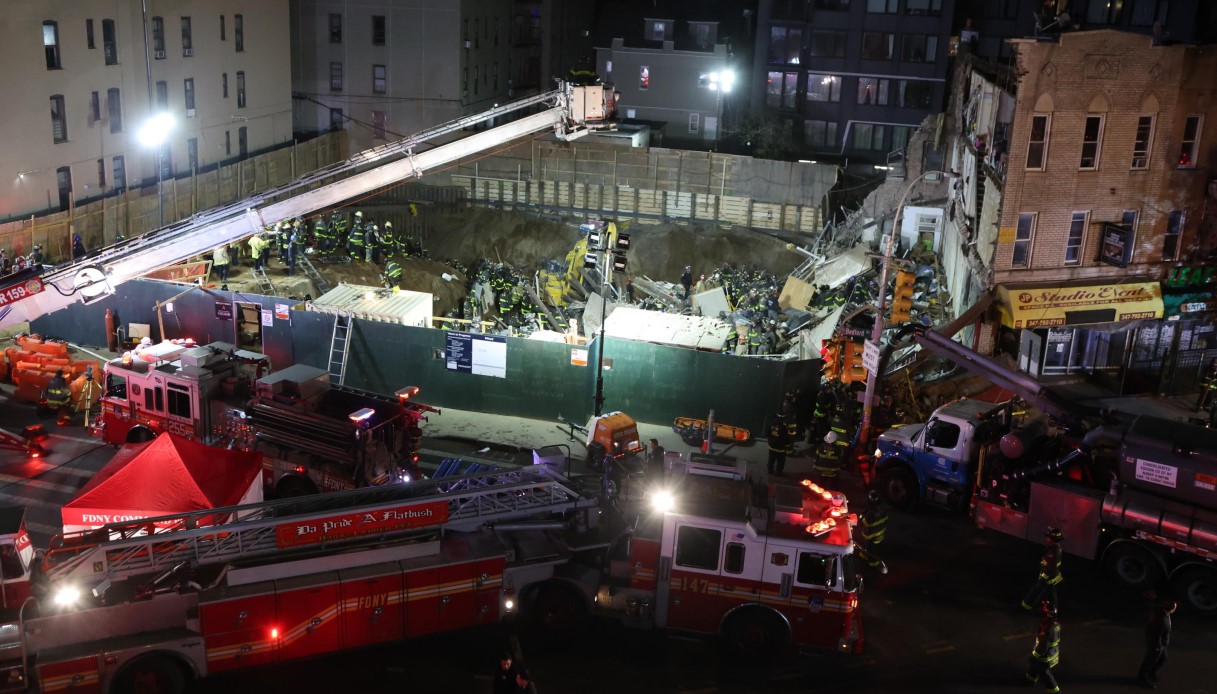
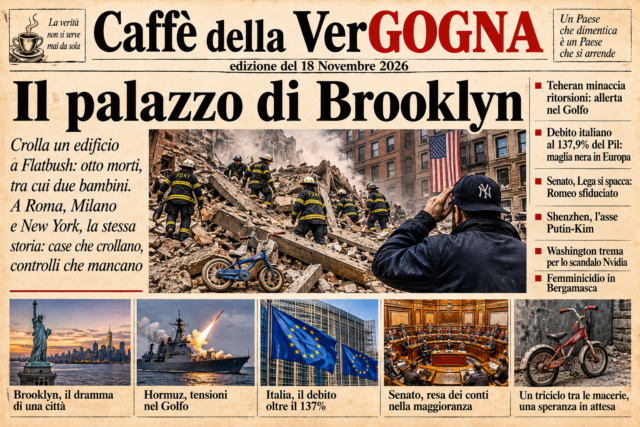
Un edificio residenziale è crollato nel quartiere di Flatbush, a Brooklyn, e sotto le macerie sono stati recuperati i corpi di otto persone, tra cui due bambini, mentre diciotto feriti gravi venivano trasportati negli ospedali della città. Il sindaco Zohran Mamdani ha disposto verifiche d’urgenza su altri cento immobili collegati allo stesso costruttore, e la frase, letta con attenzione, contiene già la sentenza: cento edifici costruiti dalla stessa mano sono ora sotto esame, e nessuno, fino a ieri, aveva ritenuto di doverli controllare. A New York come a Milano, a Roma come in provincia, le case che crollano raccontano sempre la stessa storia di carte firmate, collaudi frettolosi e manutenzioni rinviate.
Nelle stesse ore Teheran ha denunciato un raid americano sull’isola di Qeshm, nel cuore dello Stretto di Hormuz, e l’allerta è scattata in tutti i Paesi del Golfo. Marco Rubio ha cercato di gettare acqua sul fuoco rispetto all’allarme della vigilia su un possibile attentato a Washington, dichiarando che al momento non risultano minacce imminenti sulla capitale americana, e la precisazione ha il sapore di chi cerca di spegnere un incendio con le mani. Le cancellerie del Golfo, intanto, hanno chiuso le proprie acque e alzato il livello di guardia, e il petrolio ha ricominciato a muoversi.
Il commissario europeo all’Economia ha confermato che l’Italia uscirà dalla procedura per deficit eccessivo in primavera, grazie a un deficit previsto al due virgola nove per cento e alla clausola di flessibilità su difesa ed energia, e insieme ha certificato un dato che vale più di qualsiasi comunicato: il rapporto tra debito pubblico e prodotto interno lordo è salito al centotrentasette virgola nove per cento, superando la Grecia e conquistando la maglia nera dell’intera Eurozona. Il Paese che per anni ha guardato Atene come l’esempio da non seguire ha completato la scalata, e nessuno, a Roma, ha ritenuto di dover spiegare come sia stato possibile.
In Senato la Lega ha sfiduciato il proprio capogruppo Massimiliano Romeo, considerato troppo autonomo rispetto alla linea del partito, e al suo posto è arrivato Marco Dreosto. Il vertice della sera precedente con la premier sulla legge di Bilancio si è chiuso senza sciogliere i nodi principali, e la resa dei conti interna alla maggioranza ha offerto lo spettacolo consueto: mentre il Paese aspetta di sapere quali tasse pagherà e quali servizi perderà, i partiti regolano i propri conti interni e li spacciano per politica. Chi ha votato quel partito per cambiare il Paese scopre che il cambiamento riguardava le poltrone.
Dal vertice di Shenzhen è emerso il retroscena diplomatico di Kim Jong-un, che ha scelto di stringere l’asse diretto con Vladimir Putin lasciando cadere le aperture di Donald Trump. Putin ha dichiarato di attendersi grandi benefici dall’incontro e ha rivendicato con Pechino la costruzione di un ordine mondiale multipolare in cui le sanzioni occidentali hanno perso ogni potere intimidatorio. Le due autocrazie che si spartiscono il mondo hanno trovato il modo di dirsi alleate senza firmare nulla, e l’Occidente, che continua a discutere di quale delegazione mandare ai colloqui di pace, ha assistito alla scena come uno spettatore che paga il biglietto senza avere voce nel copione.
A Washington rischia il posto il segretario al Commercio Howard Lutnick, finito sotto tiro per la mancata vigilanza sullo scandalo legato all’ex amministratore delegato di Nvidia e ai sospetti di spionaggio industriale cinese. Il caso, che era partito come una vicenda aziendale, è diventato un affare di Stato, e la domanda che nessuno pone riguarda il fatto che i segreti dei microchip più avanzati del mondo siano custoditi in un’azienda privata che risponde agli azionisti e non ai cittadini. La tecnologia strategica è ormai il terreno su cui si misura la sovranità, e la sovranità, in questo campo, l’hanno costruita le multinazionali.
Nella Bergamasca un uomo ha soffocato la moglie nella loro abitazione e si è presentato dai carabinieri per confessare. La cronaca nera ha registrato l’ennesimo femminicidio con la consueta secchezza, e il fatto che l’uomo si sia consegnato spontaneamente non rende la vicenda meno atroce: una donna è morta in casa propria, e la casa, per lei, era il luogo in cui avrebbe dovuto essere al sicuro. Il giorno dopo, sui giornali, il nome della vittima occupava poche righe, e il resto dello spazio era dedicato alle trattative di bilancio e ai raid nel Golfo.
In un cortile di Flatbush, dove i vigili del fuoco hanno lavorato per ore tra le macerie, resta appoggiato a un muro un triciclo da bambino con una ruota piegata e il manubrio coperto di polvere. Accanto al triciclo, in attesa di sapere se il proprio appartamento è tra i cento da verificare, c’è un uomo che stringe in mano un mazzo di chiavi e guarda la facciata come si guarda un estraneo.
Saskia Sassen, Espulsioni. Brutalità e complessità nell’economia globale, Il Mulino, Bologna, 2015
Mike Davis, Il pianeta degli slum, Feltrinelli, Milano, 2006
Anna Bonomi, Il condominio come società, Franco Angeli, Milano, 2016
Roberto Iacovelli, La città fragile, Donzelli, Roma, 2019
Elena Granata, Placemaker, Einaudi, Torino, 2021
Gianfranco Franz, Città e crisi, Franco Angeli, Milano, 2014
Paolo Cacciari, La città infinita, Bruno Mondadori, Milano, 2010
The Brooklyn Building
Caffè della VerGOGNA — Edition of November 18, 2026
A residential building collapsed in the Flatbush neighborhood of Brooklyn, and eight bodies, including two children, were recovered from the rubble, while eighteen seriously injured people were rushed to the city’s hospitals. Mayor Zohran Mamdani ordered urgent inspections of one hundred other properties linked to the same builder, and the sentence, read carefully, already contains the verdict: one hundred buildings built by the same hand are now under review, and no one, until yesterday, had thought to inspect them. In New York as in Milan, in Rome as in the provinces, the houses that collapse always tell the same story of signed papers, hasty certifications, and postponed maintenance.
In those same hours, Tehran denounced an American raid on Qeshm island, in the heart of the Strait of Hormuz, and the alert went off in every country of the Gulf. Marco Rubio tried to pour water on the fire regarding the previous day’s alarm over a possible attack in Washington, declaring that no imminent threats against the American capital were known at this time — a clarification that tastes like someone trying to put out a blaze with bare hands. The chancelleries of the Gulf, meanwhile, closed their waters and raised their guard level, and oil began moving again.
The European Commissioner for the Economy confirmed that Italy will exit the excessive deficit procedure in the spring, thanks to a projected deficit of two point nine percent and the flexibility clause for defense and energy — and together he certified a figure worth more than any communiqué: the ratio of public debt to gross domestic product has risen to one hundred thirty-seven point nine percent, overtaking Greece and claiming the black jersey of the entire Eurozone. The country that for years looked to Athens as the example not to follow has completed its climb, and no one in Rome has deemed it necessary to explain how it was possible.
In the Senate, the League voted no confidence in its floor leader Massimiliano Romeo, considered too independent of the party line, and Marco Dreosto took his place. The summit with the prime minister on the Budget Law the evening before ended without resolving the main knots, and the settling of accounts inside the ruling majority offered the usual spectacle: while the country waits to learn which taxes it will pay and which services it will lose, the parties sort out their internal accounts and pass them off as politics. Those who voted for that party to change the country discover that the change concerned the chairs.
From the Shenzhen summit emerged the diplomatic backstory of Kim Jong-un, who chose to tighten the direct axis with Vladimir Putin, letting Donald Trump’s overtures fall away. Putin declared that he expects great benefits from the meeting and claimed, with Beijing, the building of a multipolar world order in which Western sanctions have lost all intimidating power. The two autocracies dividing up the world have found a way to call themselves allies without signing anything, and the West, still debating which delegation to send to the peace talks, watched the scene like a spectator who buys the ticket but has no voice in the script.
In Washington, Commerce Secretary Howard Lutnick risks losing his job, caught in the crossfire over the failure to monitor the scandal involving Nvidia’s former chief executive and suspicions of Chinese industrial espionage. The affair, which began as a corporate story, has become a matter of state, and the question no one asks concerns the fact that the secrets of the world’s most advanced microchips are held in a private company accountable to shareholders, not citizens. Strategic technology is now the terrain on which sovereignty is measured — and sovereignty, in this field, was built by the multinationals.
In the province of Bergamo, a man suffocated his wife in their home and then walked into a Carabinieri station to confess. The crime pages recorded yet another femicide with the usual dryness, and the fact that the man turned himself in spontaneously does not make the story any less horrific: a woman died in her own house, and the house, for her, was the place where she should have been safe. The next day, in the newspapers, the victim’s name took up a few lines, and the rest of the space went to budget negotiations and the raids in the Gulf.
In a courtyard in Flatbush, where firefighters worked for hours among the rubble, a child’s tricycle leans against a wall with a bent wheel and handlebars covered in dust. Beside the tricycle, waiting to learn whether his apartment is among the hundred under review, stands a man clutching a bunch of keys, staring at the façade the way one stares at a stranger.
References
Saskia Sassen, Expulsions: Brutality and Complexity in the Global Economy, Il Mulino, Bologna, 2015 Mike Davis, Planet of Slums, Feltrinelli, Milan, 2006 Anna Bonomi, The Condominium as Society, Franco Angeli, Milan, 2016 Roberto Iacovelli, The Fragile City, Donzelli, Rome, 2019 Elena Granata, Placemaker, Einaudi, Turin, 2021 Gianfranco Franz, Cities and Crisis, Franco Angeli, Milan, 2014 Paolo Cacciari, The Infinite City, Bruno Mondadori, Milan, 2010