







PRESS RELEASE
GIE International Security Symposium in Chișinău Highlights the Strategic Role of Reservists in European Defence and Security
Chișinău, 25 October 2026
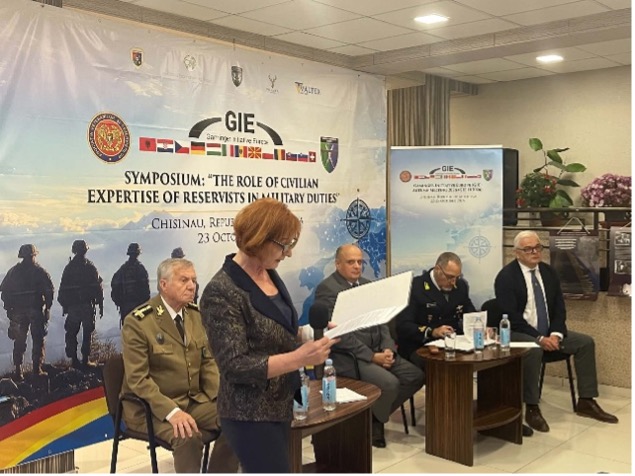
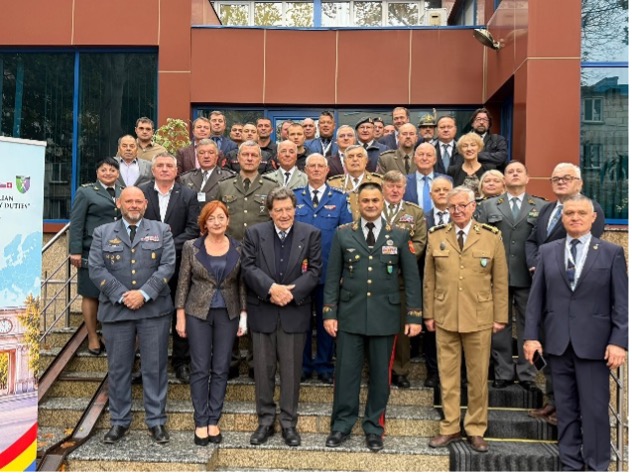
On 23 October 2026, Gaminger Initiative Europe (GIE) held an International Security Symposium entitled “The Role of Civilian Expertise of Reservists in Military Duties” in Chișinău, Republic of Moldova, as part of its Autumn Meeting 2026 (GIE-II 2026).
The symposium, hosted and organised locally by the Association of Veterans and Reservists of the Republic of Moldova (AVRRM), brought together GIE representatives, senior officials from international reservist organisations, active-duty and retired military officers, former defence and security officials, and civilian and military experts from several European countries.
The event provided an important platform for exchanging national experiences and discussing the evolving role of reserve forces in European security and defence. Particular attention was given to the lessons learned from Russia’s war against Ukraine, national resilience, military readiness, interoperability, and the growing importance of integrating reservists’ civilian professional expertise into military capabilities.
Official Opening: Responding to a Changing European Security Environment
The symposium was opened by Brigadier General (Ret.) Dr. Vitalie Marinuța, President of AVRRM and former Minister of Defence of the Republic of Moldova, who presented a brief assessment of the international security environment. He highlighted the geopolitical changes and security challenges arising from Russia’s war against Ukraine and their implications for European and regional stability. He also stressed the importance of adapting national defence policies and capabilities to the evolving strategic environment, including through more effective use of military reservists and their civilian expertise.
In her opening remarks, Lieutenant Colonel (Ret.) Nevenka Kovač of Croatia, GIE Vice-President, highlighted the importance of international cooperation and professional dialogue among European reservist organisations in addressing contemporary security challenges.
The opening ceremony also featured addresses by Colonel Vadim Bulgaru, representing the Ministry of Defence of the Republic of Moldova, and Colonel Ilie Ciocoi, Deputy General Commander of the General Inspectorate of Carabineers.
The presence of national authorities and international reservist representatives underlined the value of cooperation between defence institutions and reserve officers’ organisations in strengthening national and European security.
Panel I. European Security after Russia’s Invasion of Ukraine: Threats, Resilience and a New Security Architecture
The first panel, moderated by Colonel (Ret.) Radu Burduja, Executive Director of the Euro-Atlantic Institute for Building Resilience and former State Secretary at the Moldovan Ministry of Defence, examined the profound transformation of Europe’s security environment following Russia’s full-scale invasion of Ukraine.
In his contribution, Colonel Burduja emphasised the importance of strengthening national resilience and developing a new concept for the employment of military reservists in the Republic of Moldova. He highlighted the need to make better use of reservists’ military experience, professional qualifications and civilian expertise in both national defence and crisis management.
One of the particularly significant contributions came from Colonel (Ret.) Yurii Kompaniiets of Ukraine, International Cooperation Expert at the Center of Ukrainian Resilience Experience (CURE), who delivered a presentation entitled “Resilience as a Practical Management Skill: Ukraine’s Experience and Lessons for Europe.”
Drawing on Ukraine’s experience of confronting a large-scale war, he highlighted the importance of transforming resilience from a theoretical concept into a practical management capability. His presentation addressed the capacity of institutions and society to adapt, maintain essential functions and respond effectively under extreme conditions. The Ukrainian experience provided valuable lessons for European countries seeking to strengthen national preparedness, institutional resilience and crisis-response mechanisms.
Mihail Beregoi, former State Secretary at the Ministry of Internal Affairs of the Republic of Moldova, addressed the transformation of civilian innovation into battlefield capabilities, drawing on the practical experience of Ukraine.
Lieutenant General (Ret.) Virgil Bălăceanu of Romania examined the transition “From Mobilisation Reserve to Operational Reserve: Lessons for NATO’s Eastern Flank.” His contribution highlighted the importance of adapting reserve force structures and operational readiness to the requirements of contemporary defence.
The panel demonstrated the importance of integrating military preparedness, institutional resilience and civilian expertise into a comprehensive approach to European security.
Panel II. Reserve Forces as a Strategic Capability: Readiness, Interoperability and the EU/NATO Perspective
The second panel was moderated by Brigadier General (Ret.) Dr. Vitalie Marinuța, President of AVRRM.
Commander Giuseppe Filippo Imbalzano of Italy, representing UNUCI and a former President of GIE and CIOR, addressed the challenges of “Mobilisation in a Major Crisis.” He stressed the need for European countries to reassess and modernise their approaches to mobilisation, taking into account the changing security environment, emerging military requirements and lessons learned from recent conflicts.
Lieutenant Colonel (Ret.) Lars Bak of Denmark, President of the Interallied Confederation of Reserve Officers (CIOR), delivered a presentation on “The Modern Reservist: Connecting Military Service, Civilian Expertise and Allied Defence.”
He discussed NATO’s approach to reserve forces and the importance of integrating reservists into Allied defence structures. Particular attention was given to the role of CIOR in supporting international cooperation, professional development and interoperability among reserve officers from Allied and partner countries.
Lieutenant Colonel Filipp Leo of Switzerland, representing the Swiss Armed Forces Cyber Command and a former GIE President, presented “Cyber as a Case for the Modern Reserve: Turning Civilian Expertise into Military Capability.”
His presentation demonstrated how reservists’ specialised civilian expertise, particularly in cybersecurity and information technology, can contribute directly to military effectiveness and national defence capabilities.
The panel highlighted a shared challenge for European defence systems: how to transform reserve forces from predominantly mobilisation-oriented structures into continuously relevant, capable and interoperable components of national defence.
Panel III. Civilian Expertise as a Military Capability Multiplier
The third panel, moderated by Lieutenant Colonel (Ret.) Nevenka Kovač, GIE Vice-President, focused on the practical contribution of reservists’ civilian professional skills to military operational effectiveness.
Colonel (Ret.) Stanislas de Magnienville of France, Director of the CIOR Language Academy, addressed “Breaking Language Barriers: Civilian Expertise and the Modern Reservist.”
He emphasised the crucial role of communication and language proficiency in the current international security environment, particularly in multinational military operations and cooperation among Allied and partner forces. He also presented the opportunities offered by the CIOR Language Academy to support participating nations in improving the foreign-language proficiency of their reserve officers and strengthening military interoperability.
Colonel (Ret.) Dr. Ghinda of Romania, representing ANCMRR “Alexandru Ioan Cuza”, shared the Romanian perspective on reservists as strategic defence assets. His presentation, “The Reservist as a Strategic Asset: Turning Military Experience and Civilian Expertise into Defence Capability,” addressed the importance of combining military experience with civilian professional knowledge to strengthen national defence capabilities.
Dr. Antonio Albanese of Italy, Director of AGC Communication, delivered a presentation entitled “A European Meridian: From Crisis Management to Future Warfighting — The Reserve as a Technology Bridge.”
His contribution offered an in-depth examination of the evolving relationship between technological innovation, crisis management and the future operational requirements of armed forces. He explored the potential of reservists to serve as a bridge between civilian technological developments and military applications, particularly in an increasingly complex and rapidly changing security environment.
Brigadier General (Ret.) Dr. Iurie Dominic, former Chief of Defence of the Republic of Moldova, presented “Mobilizing Specialist and Civilian Expertise for Defence and Crisis Response.”
Drawing on the Moldovan perspective, he addressed the importance of identifying, preparing and effectively employing specialists and reservists with relevant civilian expertise in support of national defence and crisis-response requirements.
The panel concluded with a discussion on the civilian skills that armed forces will increasingly require from reservists over the next five to ten years, including cybersecurity, emerging technologies, communication, logistics, specialised technical capabilities and crisis management.
High-Level Closing Session: From Discussion to Action
The symposium concluded with a high-level session dedicated to the future role of European reservists and the implications of the discussions for national and international cooperation.
The closing session featured contributions from Commander (Ret.) Giuseppe Filippo Imbalzano, former President of GIE and CIOR; Lieutenant Colonel (Ret.) Lars Bak, CIOR President; Lieutenant Colonel (Ret.) Nevenka Kovač, GIE Vice-President; and Brigadier General (Ret.) Dr. Vitalie Marinuța, AVRRM President.
Throughout the discussions, a central message emerged: reservists should no longer be regarded solely as a mobilisation resource, but as an essential and continuously relevant component of national defence systems.
Their combination of military training, civilian professional experience, technical qualifications and international exposure represents an important strategic asset for European countries.
The experience of Ukraine has further demonstrated that modern defence requires the effective integration of military and civilian capabilities, institutional resilience, technological adaptability and the ability to mobilise specialised expertise when needed.
Strengthening European Cooperation Through Gaminger Initiative Europe
The Chișinău symposium reflected the continuing relevance of Gaminger Initiative Europe as a platform for dialogue, cooperation and the exchange of professional experience among European reserve officers and defence experts.
By bringing together representatives of different national defence systems, international reservist organisations and specialists from diverse professional backgrounds, GIE facilitates the exchange of practical knowledge and encourages innovative approaches to the challenges facing European reserve forces.
The participation of the CIOR President, former GIE and CIOR leaders, representatives of national reservist organisations and military experts highlighted the importance of maintaining close links between European professional networks and the broader international reservist community.
The discussions in Chișinău also reinforced the importance of cooperation between NATO and non-NATO countries in exchanging experience, improving preparedness and strengthening resilience in the face of common security challenges.
The future effectiveness of European reserve forces will increasingly depend on their ability to combine military competence with civilian expertise, technological innovation and international interoperability.
The symposium provided a valuable contribution to this ongoing professional dialogue and offered perspectives for further cooperation within the GIE community and with its international partners.
Appreciation to the Host Organisation
Gaminger Initiative Europe expresses its appreciation to the Association of Veterans and Reservists of the Republic of Moldova (AVRRM), under the leadership of Brigadier General (Ret.) Dr. Vitalie Marinuța, for hosting the Autumn Meeting 2026 and organising the International Security Symposium in Chișinău.
GIE also acknowledges the valuable contributions of all speakers, moderators, institutional representatives and international participants whose expertise and commitment contributed to the professional exchange of ideas and experiences.
The successful organisation of this international gathering in the Republic of Moldova demonstrated the importance of maintaining an active and inclusive European network of reservists committed to cooperation, professionalism and the strengthening of European security.
Gaminger Initiative Europe (GIE)
Autumn Meeting 2026 – Chișinău, Republic of Moldova
23–25 October 2026