





Caffè della VerGOGNA – edizione del 25 Settembre 2026
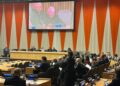
Susan Sarandon è stata arrestata dalla polizia di New York durante una manifestazione di protesta all’esterno del Palazzo di Vetro, mentre dentro l’Assemblea Generale il premier israeliano Netanyahu pronunciava il suo intervento tra le tensioni diplomatiche che accompagnano ogni sua apparizione. L’attrice premio Oscar, che da anni porta il proprio attivismo nelle piazze più scomode, ha scelto di farsi mettere in manette davanti alle telecamere di tutto il mondo, e lo spettacolo della protesta ha finito per oscurare le parole dei leader riuniti in aula. Hollywood, quando scende in strada, sa trasformare la politica in teatro, e la domanda che resta aperta è se il gesto serva alla causa o soltanto all’immagine di chi lo compie.
Un cittadino italiano ha scoperto in un’intercapedine una fortuna in banconote del vecchio conio, oltre due miliardi di lire, e si è precipitato in banca convinto di aver risolto la propria vita. La doccia fredda è arrivata puntuale: i termini di prescrizione per la conversione in euro sono scaduti da anni, e l’uomo si ritrova milionario sulla carta con carta straccia tra le mani. Ha annunciato una battaglia legale sui termini di decadenza, e la sua storia, che sembra uscita da una commedia degli equivoci, racconta un Paese dove anche la fortuna arriva troppo tardi.
A Reggio Emilia, i carabinieri hanno incastrato un ladro specializzato in furti di materiale sacro che aveva smontato le grondaie in rame di una chiesa parrocchiale. Il volto era coperto da un cappuccio, le telecamere non potevano identificarlo, ma la sua andatura zoppicante e a dondolo era già nota alle forze dell’ordine della zona. Il corpo, quando tradisce, lo fa con la stessa precisione con cui la mente crede di aver previsto tutto, e il ladro delle grondaie ha scoperto che il proprio passo vale più di un’impronta digitale.
A Senigallia, un’anziana ha mandato a monte la truffa del finto incidente del figlio con una mossa che meriterebbe di essere insegnata nelle scuole. I malviventi l’avevano chiamata chiedendo soldi e invitandola a riagganciare per verificare al 112, usando il trucco che tiene occupata la linea. Lei ha lasciato il ricevitore sul tavolo, si è affacciata al balcone e ha urlato ai vicini di chiamare la vera polizia, mettendo in fuga i truffatori che ascoltavano in attesa. La prontezza di una signora che conosce il mondo meglio di molti esperti ha sventato un reato, e la sua trovata è la notizia più intelligente della giornata.
In Inghilterra, l’attivista di estrema destra Danny Tommo è finito nella bufera per un video in cui buca deliberatamente un gommone destinato alle traversate della Manica. L’uomo ha compiuto il gesto davanti alla telecamera per fare provocazione politica, e le polemiche sono esplose per il rischio di strage che quel taglio avrebbe potuto provocare se il gommone fosse stato in mare con a bordo dei migranti. La propaganda, quando si spinge fino a mettere in pericolo vite umane per un like, smette di essere opinione e diventa qualcos’altro, e il confine tra il gesto simbolico e il sabotaggio criminale si assottiglia fino a sparire.
Oggi si celebra la Notte Europea delle Ricercatrici e dei Ricercatori, e gli astrofisici dell’Inaf hanno deciso di abbandonare le conferenze tradizionali per trasformare musei e piazze italiane in escape room quantistiche. I visitatori, per uscire dalle stanze, devono risolvere paradossi sulla fisica dei buchi neri e sulle equazioni di Einstein, e la scienza, per una sera, si traveste da gioco. L’idea è brillante e il messaggio è chiaro: la conoscenza, quando smette di essere lezione frontale, può diventare esperienza condivisa, e i ricercatori italiani hanno dimostrato di saper uscire dal laboratorio senza perdere il rigore.
All’indomani delle aggressioni ai docenti negli istituti romani, le autorità hanno disposto controlli a raggio nelle scuole e un monitoraggio speciale sulle piattaforme social e sulle chat di gruppo degli studenti. La misura ha diviso l’opinione pubblica tra chi invoca tolleranza zero e chi parla di sorveglianza di Stato dentro gli istituti, e la questione, che tocca il delicato equilibrio tra sicurezza e privacy dei minori, merita un dibattito che nessun comunicato può esaurire. Le scuole, da sempre, sono il luogo dove la società si riflette, e ciò che vi accade oggi dice molto su ciò che siamo diventati fuori.
Il caffè della vergogna, stamattina, sa di manette e di carta straccia, di rame rubato e di truffe sventate, di gommoni bucati e di buchi neri. Un’attrice si fa arrestare davanti al Palazzo di Vetro, un uomo scopre di essere ricco e non può incassare, un ladro zoppo finisce in manette per colpa del proprio passo, una signora mette in fuga i truffatori dal balcone, un estremista buca un gommone per un video, gli scienziati giocano con Einstein, e i professori finiscono sotto osservazione. La realtà, anche oggi, non ha bisogno di essere surreale: le basta accadere.
Primo Levi, Storie naturali, Einaudi, Torino, 1966
Italo Calvino, Le cosmicomiche, Einaudi, Torino, 1965
Zygmunt Bauman, Consumo, dunque sono, Laterza, Roma-Bari, 2008
Neil Postman, Divertirsi da morire, Marsilio, Venezia, 2002
Hannah Arendt, Verità e politica, Bollati Boringhieri, Torino, 2004
Michel Foucault, Sorvegliare e punire, Einaudi, Torino, 1976
Umberto Eco, Diario minimo, Bompiani, Milano, 1963
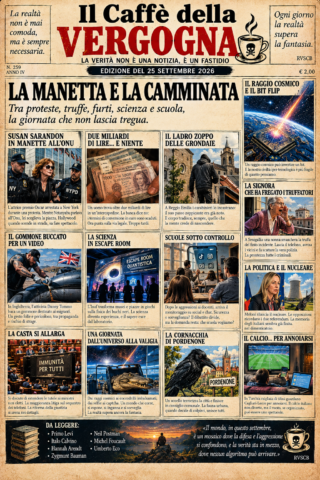
The Handcuffs and the Walk Caffè della VerGOGNA — September 25, 2026 Edition
Susan Sarandon was arrested by New York police during a protest outside the Glass Palace, while inside the General Assembly Israeli Prime Minister Netanyahu delivered his address amid the diplomatic tensions that accompany each of his appearances. The Oscar-winning actress, who for years has brought her activism to the most awkward squares, chose to have herself handcuffed before cameras from around the world, and the spectacle of protest ended up overshadowing the words of leaders gathered in the hall. Hollywood, when it takes to the streets, knows how to turn politics into theater, and the question that remains open is whether the gesture serves the cause or merely the image of whoever performs it.
An Italian citizen discovered a fortune in old-currency banknotes tucked away in a wall cavity—over two billion lire—and rushed to the bank convinced he had solved his life. The cold shower came right on schedule: the limitation periods for conversion to euros expired years ago, and the man finds himself a millionaire on paper with scraps of paper in his hands. He has announced a legal battle over the expiration terms, and his story, which seems ripped from a comedy of errors, tells of a country where even luck arrives too late.
In Reggio Emilia, the Carabinieri caught a thief specializing in thefts of sacred materials who had dismantled the copper gutters of a parish church. His face was covered by a hood; the cameras couldn’t identify him. But his limping, swaying gait was already known to local law enforcement. The body, when it betrays, does so with the same precision with which the mind believes it has foreseen everything, and the gutter thief discovered that his own step was worth more than a fingerprint.
In Senigallia, an elderly woman foiled the scam of the fake son’s accident with a move worthy of being taught in schools. The criminals had called her demanding money and invited her to hang up to verify via 112, using the trick that keeps the line busy. She left the receiver on the table, leaned out onto her balcony, and shouted to neighbors to call the real police, sending the scammers fleeing who were listening on hold. The quick thinking of a lady who knows the world better than many experts thwarted a crime, and her stroke of genius is the smartest news of the day.
In England, far-right activist Danny Tommo landed in controversy over a video in which he deliberately punctured a rubber dinghy destined for Channel crossings. The man performed the act on camera for political provocation, and the outcry exploded over the massacre risk that cut could have caused if the dinghy had been at sea with migrants aboard. Propaganda, when it pushes to the point of endangering human lives for a like, ceases to be opinion and becomes something else, and the line between symbolic gesture and criminal sabotage thins until it disappears.
Today marks the European Night of Researchers, and INAF astrophysicists have decided to abandon traditional lectures to transform Italian museums and squares into quantum escape rooms. Visitors, to exit the rooms, must solve paradoxes about black hole physics and Einstein’s equations, and science, for one evening, dresses up as a game. The idea is brilliant and the message clear: knowledge, when it stops being a lecture, can become a shared experience, and Italian researchers have proven they can leave the lab without losing rigor.
Following attacks on teachers in Roman institutes, authorities ordered sweep controls in schools and special monitoring on social platforms and student group chats. The measure divided public opinion between those calling for zero tolerance and those speaking of state surveillance inside institutions, and the issue, touching the delicate balance between security and minors’ privacy, deserves a debate no press release can exhaust. Schools, always, are where society reflects itself, and what happens there today says much about what we have become outside.
This morning’s coffee of shame tastes of handcuffs and scraps of paper, stolen copper and thwarted scams, punctured dinghies and black holes. An actress gets herself arrested in front of the Glass Palace, a man discovers he’s rich and cannot collect, a limping thief lands in handcuffs because of his own step, a lady chases scammers from her balcony, an extremist punctures a dinghy for a video, scientists play with Einstein, and professors end up under observation. Reality, even today, doesn’t need to be surreal: it is enough for it to happen.
Primo Levi, Natural Histories, Einaudi, Turin, 1966 Italo Calvino, The Cosmicomics, Einaudi, Turin, 1965 Zygmunt Bauman, Consuming Life, Laterza, Rome-Bari, 2008 Neil Postman, Amusing Ourselves to Death, Marsilio, Venice, 2002 Hannah Arendt, Truth and Politics, Bollati Boringhieri, Turin, 2004 Michel Foucault, Discipline and Punish, Einaudi, Turin, 1976 Umberto Eco, Minimal Diaries, Bompiani, Milan, 1963